Imagine a world where a rural community has the same access to digital services as a major city, where emergency teams stay connected after a flood or wildfire, where smart glasses can translate a conversation in real time, and where the network quietly saves energy when nobody is using it. This is the kind of future that 6G is being designed to support. In this context, 6G, as a term, refers to the evolution of 5G, which was and is being defined by the 3rd Generation Partnership Project (3GPP). It is not simply about faster phones. It is about building the next layer of digital infrastructure: more reliable, more intelligent, more sustainable, and able to connect people and services in places where today’s networks still struggle.
Beyond Faster Phones
6G is the next generation of mobile technology after 5G, but it is better understood as a long-term evolution rather than a sudden replacement. The global standard is being developed through 3GPP, the international partnership that defines the technical specifications used by mobile networks around the world. The work is still at the study stage: industry, universities, operators, vendors and public bodies are testing which ideas are realistic enough to become part of the future standard. The direction is deliberately cautious. 6G should be more capable than 5G, but not so complex, expensive or energy-hungry that it becomes difficult to deploy and operate.
Smarter, Greener Networks
The main changes being pursued are improved coverage, better reliability, smarter use of artificial intelligence, closer integration with satellites, lower energy consumption and the ability for networks to support sensing as well as communication. In everyday terms, this could mean stronger fixed wireless broadband for homes that are hard to reach with fibre, better connectivity on trains and motorways, more resilient networks during emergencies, and smoother support for immersive services such as augmented reality. Energy efficiency is especially important: a useful shorthand is “zero bits, zero Watt” meaning that when there is no data to transmit, the network should consume as little energy as possible. Dr. Abdurazak “Abdu” Mudesir, then Group CTO and later Board Member for Product and Technology with Deutsche Telekom presented this idea publicly as part of FTH 6G Symposium event in March 2025 and DT’s longer-term AI-driven network vision.
Connected When It Matters Most
One of the clearest use cases is transport and public safety. Future 6G networks could help keep people connected on trains, motorways, shipping routes and remote roads where coverage today is patchy or inconsistent. In emergencies, the same technologies could allow ambulances, fire crews, drones, hospitals and local authorities to share live information even when fixed infrastructure is damaged or overloaded. This is where the combination of terrestrial networks, satellites and intelligent network management becomes powerful: the user may not know which network layer is carrying the connection, but the service remains available when it matters.
Intelligent Networks
AI will be central to 6G, but it is also one of the most debated areas. AI could help networks predict demand, improve coverage decisions, manage radio resources, reduce unnecessary signaling, and automate parts of network operation. It could also support future AI services running across devices, applications, and networks. The benefit is a network that adapts more intelligently to people’s needs. The risk is that AI can add complexity, increase energy use, create security concerns, or make systems harder to understand and control. As a consequence, there is a strong focus on a) developing stable, validated and verified AI solutions for networks, b) using AI where it delivers measurable benefits and on making future systems secure, trustworthy, and interoperable. There are also international activities to standardise training data to minimise the risk of bias and data poisoning.
The Rules That Make 6G Possible
Regulation is not a side issue for 6G; it is part of the core technology story. Spectrum – the radio frequencies used by mobile and satellite systems – is limited, valuable and internationally coordinated. This is especially important for satellite integration, because satellites cross national borders and can interfere with terrestrial systems if rules are not carefully aligned. Regulators will also have a role in privacy, AI governance, security, sensing, and the use of data. In short, 6G is not only a technical project; it is also a policy, safety, and public-interest project.
From Lab to Global Standards
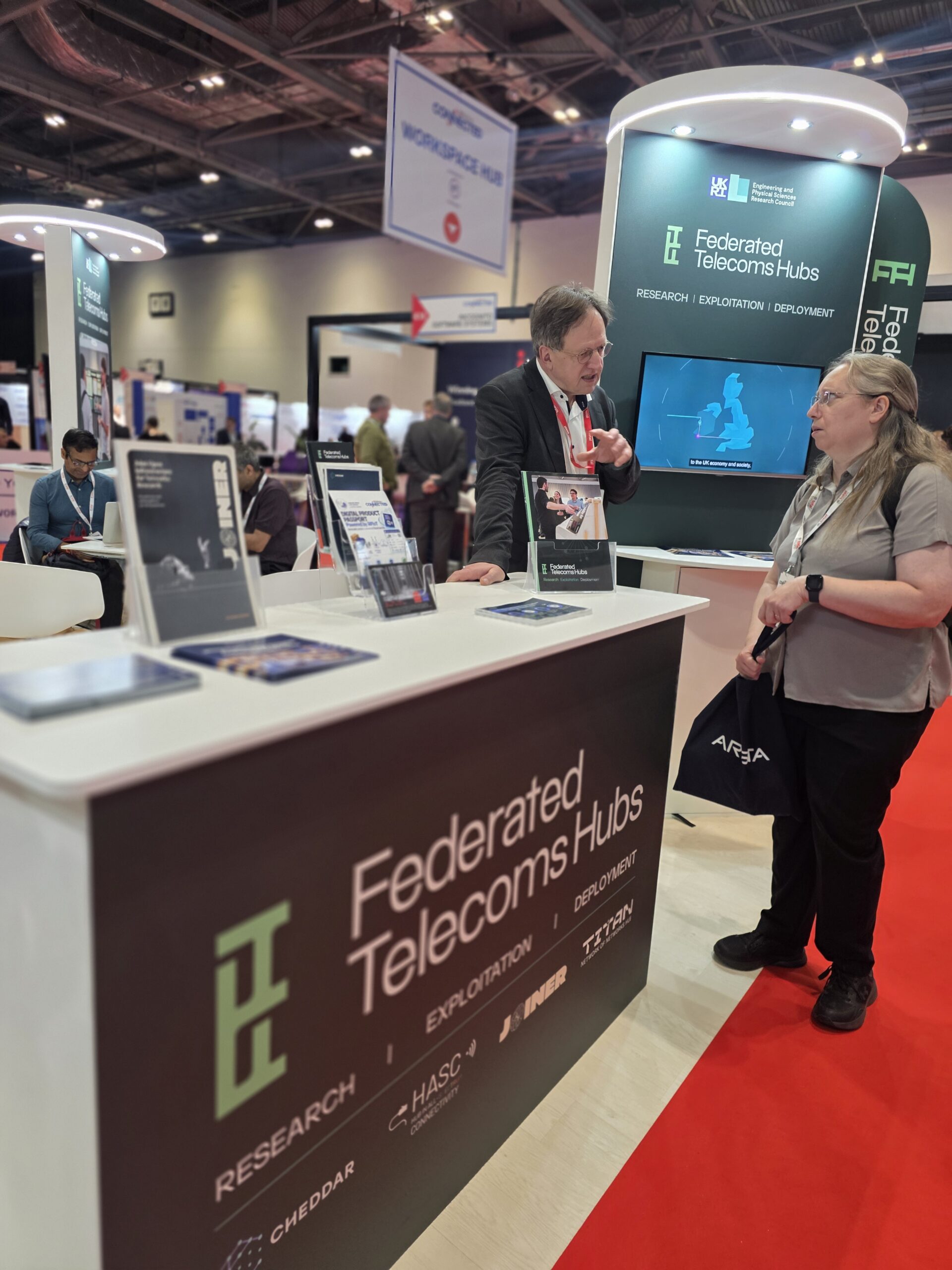
Across the Federated Telecoms Hubs’ member universities, researchers are already doing strong work in areas that map directly onto the emerging 6G agenda: advanced wireless systems, AI for networks, secure and trustworthy communications, sensing, satellite and non-terrestrial connectivity, spectrum sharing, energy efficiency and resilient infrastructure. This work matters because standards need evidence, not just ideas. FTH can help by testing whether promising techniques actually improve performance, whether they are energy efficient, whether they are secure, and whether they can work under realistic deployment conditions. It can also help translate academic research into standards-ready contributions by aligning simulations, assumptions and evaluation methods with the way 3GPP studies are conducted.
Solving the Challenges That Matter
The overall message is that 6G is still open enough for research to shape it but mature enough that contributions must be practical and evidence-based. The most important question is not “how fast will 6G be?” but “what problems will it solve?” If developed well, 6G could improve rural connectivity, strengthen emergency response, support future transport systems, enable more intelligent digital services and make networks more sustainable. Its success will depend on balancing ambition with real-world deployability, security and public value.